


Javier Lopez
Jlopezmedinaceli@lc.edu
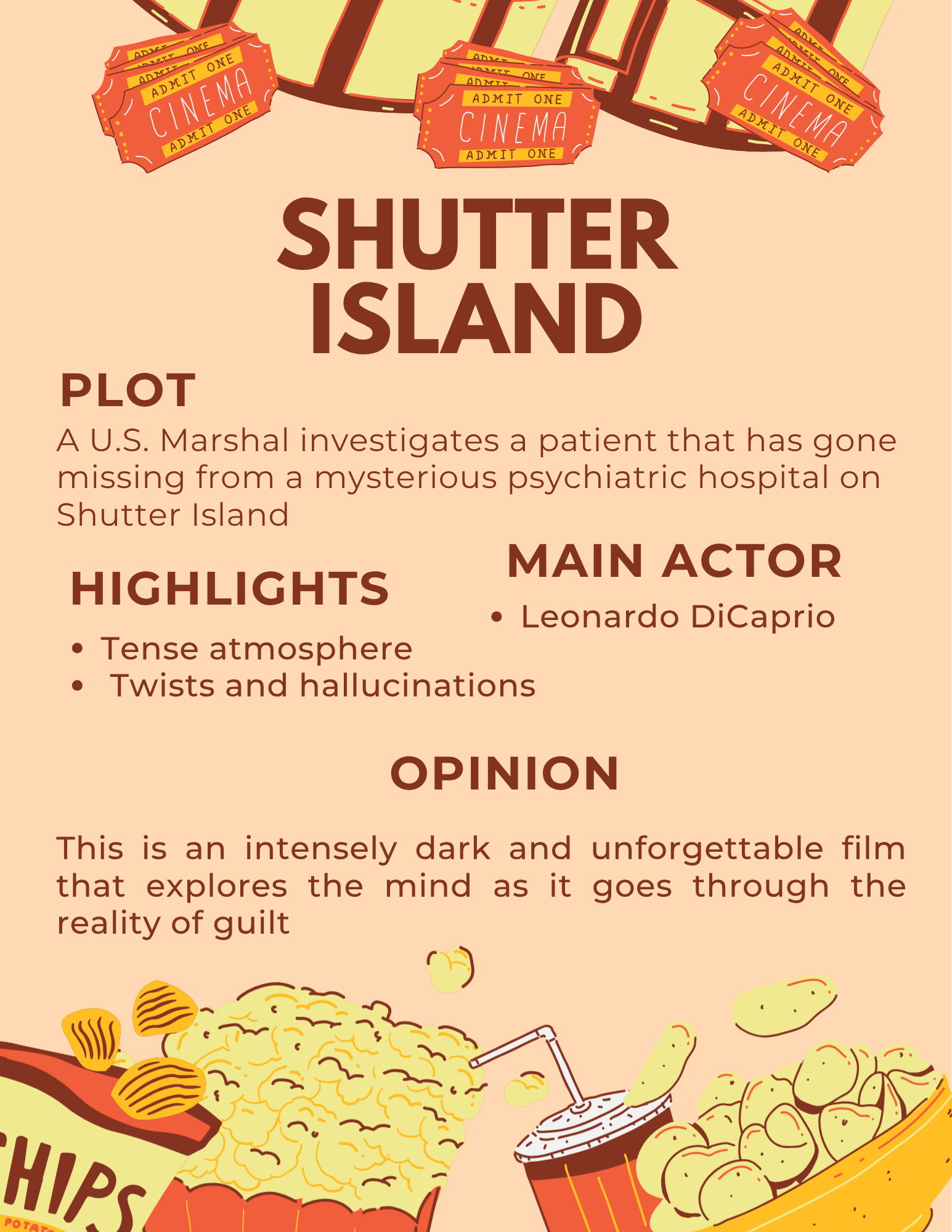
Godfrey – Released in 2010 and directed by Martin Scorsese, Shutter Island is a psychological thriller that masterfully blends mystery, tension, and emotional depth. Starring Leonardo DiCaprio, the film has become one of modern cinema’s most unsettling and talked-about works.
The story follows U.S. Marshal Teddy Daniels as he arrives at the remote Shutter Island with his partner to investigate the disappearance of a patient from a psychiatric hospital. From the very beginning, the island exudes an oppressive atmosphere: surrounded by water, heavily guarded, and filled with secrets. As the investigation progresses, Teddy starts to suspect that nothing is as it seems.
One of the film’s strongest points is its atmosphere. Martin Scorsese crafts a setting full of tension, with storms, dark corridors, and a constant sense of paranoia. The audience feels trapped alongside the protagonist, unsure of who to trust.
Leonardo DiCaprio delivers a pivotal performance. His character is marked by trauma, memories of war, and deep emotional instability that gradually unfolds. Through dreams, hallucinations, and flashbacks, the movie blurs the line between reality and the mind in a brilliant way.
What truly makes Shutter Island unforgettable is its final twist. Without spoiling anything, the revelation completely changes how you perceive everything that came before. It’s a film that invites multiple viewings, as many details take on new meaning after the truth is revealed.
At its core, Shutter Island is more than a thriller—it’s a meditation on guilt, pain, and the mind’s ability to protect itself from reality. Its haunting final question lingers long after the credits roll.
In short, Shutter Island is an intense, dark, and psychologically complex experience, showcasing why Martin Scorsese and Leonardo DiCaprio form one of modern cinema’s most powerful collaborations.