

Javier Lopez
Jlopezmedinaceli@gmail.com
Godfrey – Autism Spectrum Disorder (ASD) is a neurodevelopmental condition that affects how individuals perceive, process, and interact with the world around them. Beyond its clinical characteristics, one of the greatest challenges faced by people with autism is social inclusion, especially in everyday environments such as school, work, and personal relationships.
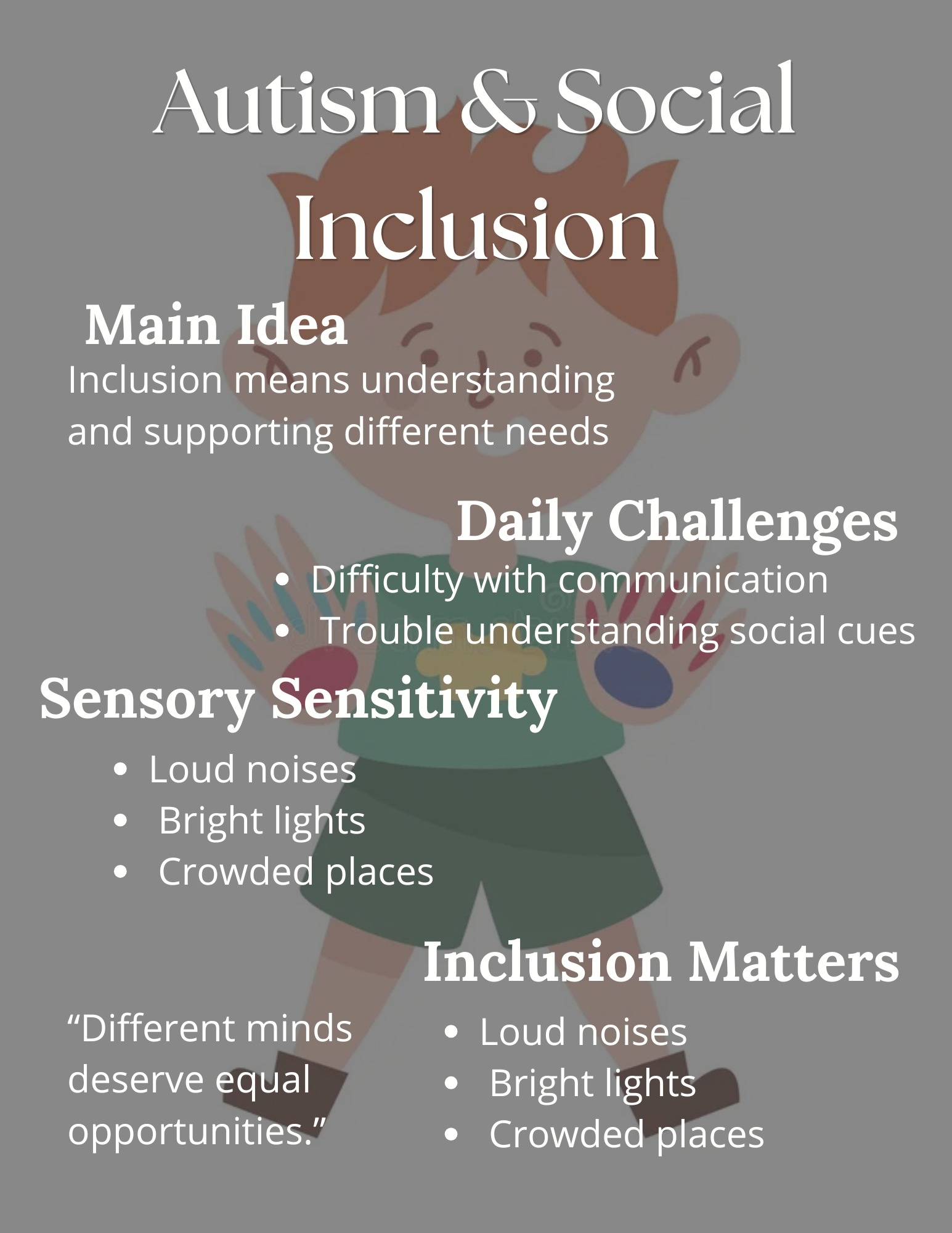
In daily life, many individuals with autism experience difficulties with social communication. They may find it hard to interpret facial expressions, understand body language, or engage in informal conversations. As a result, misunderstandings can occur, sometimes leading to social isolation. For example, in school settings, a student with ASD may struggle to participate in group activities or form friendships—not because of a lack of interest, but due to barriers in communication.
Another significant challenge is sensory sensitivity. Loud noises, bright lights, or crowded environments can feel overwhelming. Everyday situations such as going to the supermarket, attending classes, or using public transportation may become stressful experiences. These reactions are often misunderstood by others, which can lead to unfair judgments about the individual’s behavior.
Social inclusion goes far beyond simply allowing individuals with autism to be present in society. It requires active efforts toward understanding, empathy, and adaptation. In education, this may involve providing individualized support, structured environments, and promoting respect among students. In the workplace, it means recognizing each person’s strengths and making reasonable adjustments to help them succeed.
Despite these challenges, many individuals with autism possess unique strengths, such as strong attention to detail, logical thinking, and creativity. When given the right support, they can thrive and make meaningful contributions to society. A well-known example is Temple Grandin, who has shown how individuals on the spectrum can achieve great success.
In conclusion, social inclusion for people with autism is a shared responsibility that requires a shift in perspective. It is not only about individuals with ASD adapting to society, but also about society adapting to them. Through empathy, education, and respect, we can create a more inclusive world where everyone has the opportunity to reach their full potential.