

Javier Lopez
Jlopezmedinaceli@gmail.com
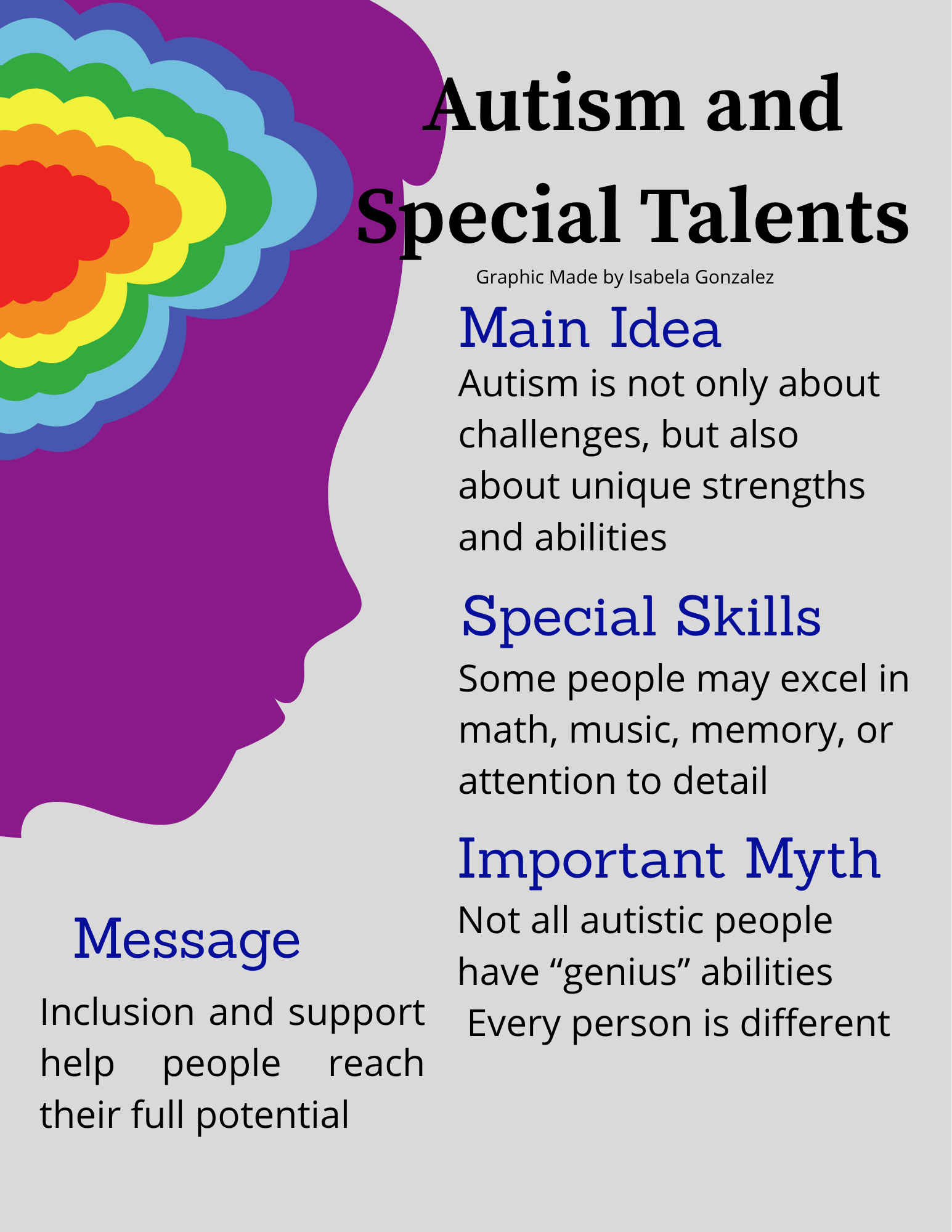
Godfrey – Autism Spectrum Disorder is often discussed in terms of challenges in communication and social interaction. However, another important aspect that deserves attention is the wide range of abilities, strengths, and talents that many autistic individuals can have. While autism affects each person differently, it is important to understand that being on the spectrum does not define someone’s potential.
Some individuals with autism show exceptional abilities in specific areas such as mathematics, music, visual thinking, memory, or attention to detail. These strengths are not universal, but they highlight how differently the autistic brain can process information. For example, some people may be able to notice patterns or details that others might overlook, which can be very valuable in fields like engineering, science, art, or technology.
However, it is also important not to fall into stereotypes. Not every autistic person has “extraordinary” or savant-like abilities. In fact, the idea that all autistic individuals have genius-level talents is a myth. Autism is a spectrum, meaning abilities vary widely from person to person. Some may have outstanding skills in a particular area, while others may have average abilities but still unique ways of thinking that contribute in meaningful ways.
A well-known example of someone on the autism spectrum is Temple Grandin. She is a professor of animal science and one of the most recognized voices in autism awareness. Grandin has explained how her way of thinking visually, rather than verbally, helped her design more humane livestock handling systems. Her success shows how different cognitive styles can lead to innovative contributions when properly understood and supported.
In recent years, the concept of neurodiversity has helped change how society views autism. Instead of focusing only on difficulties, this perspective emphasizes that neurological differences can also bring valuable strengths. It encourages schools, workplaces, and communities to adapt environments so that individuals with autism can thrive and use their abilities effectively.
Despite this progress, challenges still exist. Many autistic individuals do not always have opportunities to develop or showcase their talents because of lack of support or misunderstanding. This is why inclusion is so important: when people are given the right tools and acceptance, their abilities can flourish in ways that benefit both themselves and society.
In conclusion, autism is not defined only by difficulties, but also by diversity in thinking and unique strengths. Recognizing and supporting these talents helps move society away from stereotypes and toward a more inclusive and respectful understanding of human potential.