


Javier Lopez
Jlopezmedinaceli@gmail.com
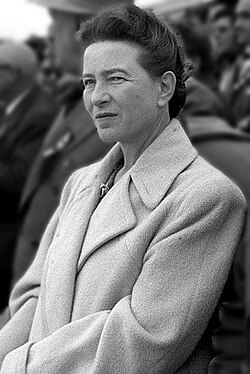
Godfrey – Simone de Beauvoir was a French philosopher, writer, and political thinker who became one of the most influential voices in modern feminism. She was born on January 9, 1908, in Paris, France, into a middle-class family. At a time when most women were expected to marry and focus on family life, Beauvoir chose a different path. She was determined to pursue higher education and build an intellectual career, something that was still uncommon for women in the early 20th century.
She studied philosophy at the Sorbonne, one of France’s most prestigious universities. There, she met other young intellectuals, including Jean-Paul Sartre, who would become a lifelong colleague and philosophical partner. Together, they were central figures in existentialism, a philosophical movement that emphasizes freedom, personal responsibility, and the idea that individuals create their own identity through their choices.
Simone de Beauvoir’s most famous and influential work is The Second Sex, published in 1949. This groundbreaking book examined the history, myths, and social structures that shaped women’s roles in society. Beauvoir argued that women had been treated as “the Other,” meaning they were defined in relation to men rather than as independent individuals. One of her most powerful and widely quoted statements from the book is: “One is not born, but rather becomes, a woman.” With this idea, she explained that gender roles are largely shaped by culture, expectations, and upbringing—not by biology alone.
When The Second Sex was first published, it caused strong reactions. Some people criticized it for challenging traditional views about marriage, motherhood, and religion. However, many others saw it as revolutionary. The book became a foundation for second-wave feminism in the 1960s and 1970s, inspiring women to question inequality in education, work, politics, and personal life.
In addition to her philosophical essays, Beauvoir wrote novels such as She Came to Stay and several memoirs that explored themes of freedom, love, morality, and human relationships. Her writing combined personal experience with deep philosophical reflection, making her work both intellectual and relatable.
Throughout her life, Simone de Beauvoir supported women’s rights movements and advocated for equality in employment, education, and reproductive rights. She believed that true freedom required economic independence and social change. Her ideas helped shape modern conversations about gender, identity, and equality.
Simone de Beauvoir died in 1986, but her influence remains strong. She is remembered as a pioneer who challenged traditional norms and encouraged women to see themselves as independent, capable individuals. Her work continues to be studied around the world and remains essential to understanding feminism and modern social thought.