


Javier Lopez
Jlopezmedinaceli@lc.edu
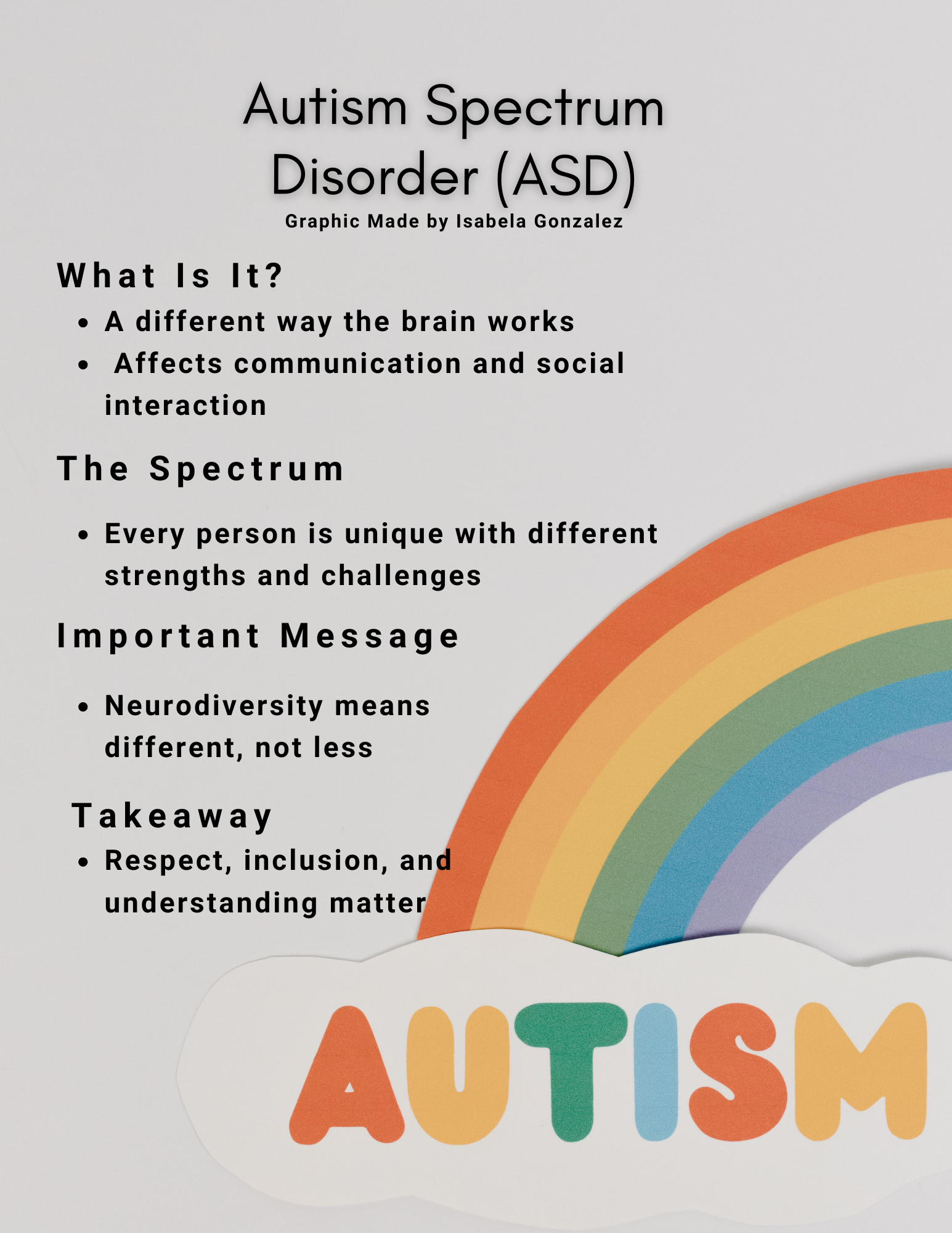
Godfrey – Autism Spectrum Disorder is a neurodevelopmental condition that affects how a person communicates, interacts socially, and understands the world around them. It is not a disease that can be “cured,” but rather a different way the brain develops and processes information that lasts throughout a person’s life.
It is called a “spectrum” because there is no single type of autism. Every individual on the spectrum is different: some people may need significant support in their daily lives, while others can live independently. This wide variation is why autism cannot be described in a single way, as each person has their own unique strengths and challenges.
One of the main areas affected in autism is communication. Some individuals may have difficulties with speech or maintaining conversations, while others may have advanced verbal skills but struggle with understanding nonverbal communication such as facial expressions, tone of voice, or body language. These differences can make social interactions more complex, especially in fast-paced or unstructured environments.
Diagnosis of Autism Spectrum Disorder usually takes place during childhood and is based on behavioral observations and developmental history. Professionals assess three main areas: social interaction, communication, and repetitive behaviors or highly focused interests. There is no single medical test for autism, which makes the evaluation process detailed and clinical.
In recent years, understanding of autism has improved significantly. Today, it is often viewed through the lens of neurodiversity, a concept that recognizes neurological differences as natural variations of the human brain rather than deficits. This perspective promotes acceptance and inclusion, emphasizing that there is no single “right” way to think, learn, or behave.
Despite greater awareness, several myths about autism still exist. For example, some people wrongly believe that autistic individuals do not feel emotions. In reality, they do experience emotions deeply, although they may express them differently. Another misconception is that autism has a single cause or is linked to parenting style, when in fact it is a complex condition influenced by genetic and biological factors.
In conclusion, understanding autism means moving beyond stereotypes and recognizing the diversity of human minds. Building a more inclusive society requires empathy, awareness, and respect for different ways of experiencing the world, allowing every individual to reach their full potential.