


Javier Lopez
Jlopezmedinaceli@lc.edu
Godfrey – The video game Fortnite, developed by Epic Games, has grown into one of the most recognizable and influential titles in modern gaming. Since its release in 2017, it has attracted millions of players around the world, becoming not only a game but also a cultural and social platform that continues to evolve year after year.
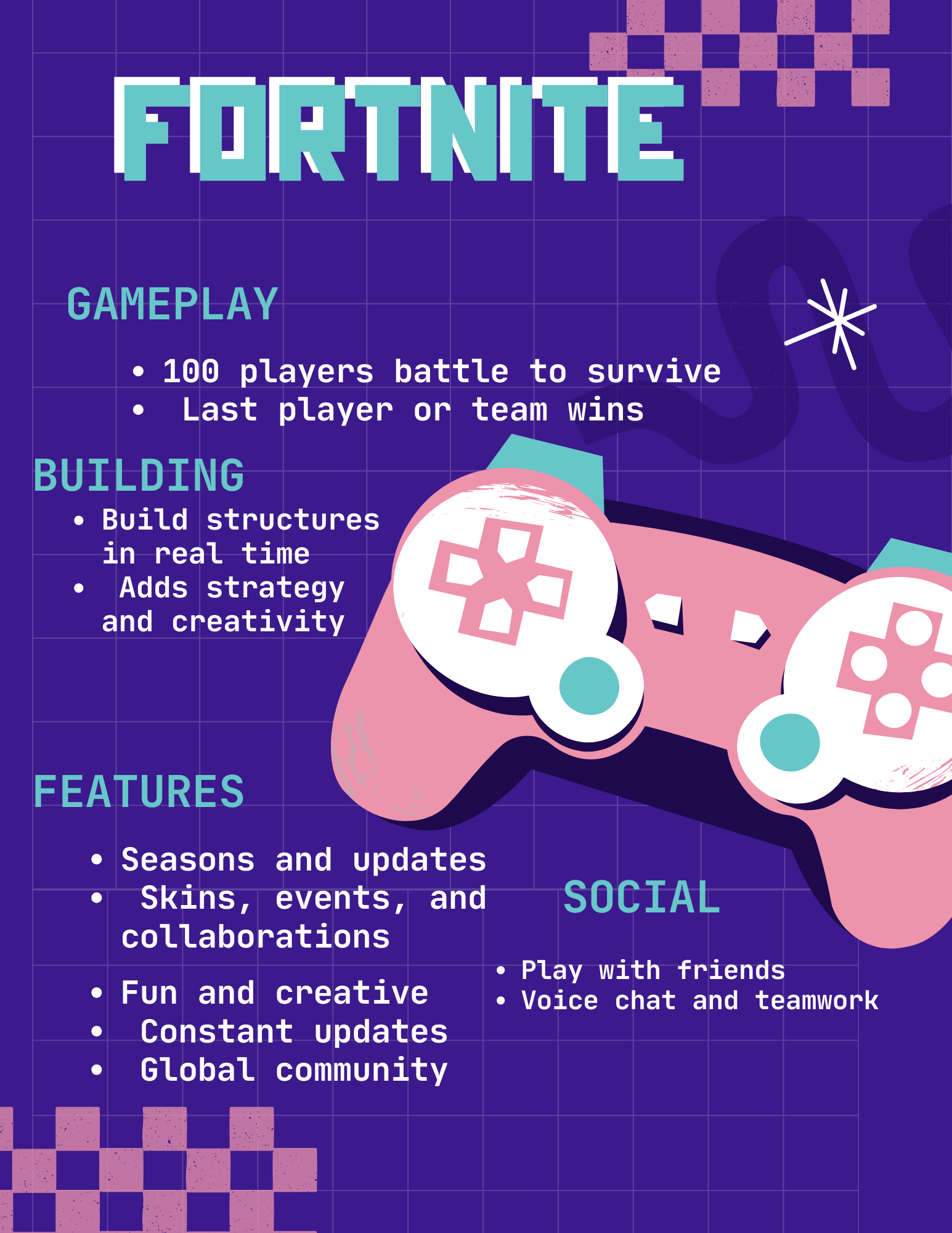
At its core, “Fortnite” is a battle royale game in which 100 players are dropped onto an island and must fight to be the last person or team standing. While this concept is shared with other games in the genre, what makes “Fortnite” truly unique is its building mechanic. Players can gather materials such as wood, brick, and metal to construct structures instantly. This adds a strategic layer that combines shooting skills with creativity and quick decision-making, making every match dynamic and unpredictable.
Another key reason for the game’s success is its constant evolution. “Fortnite” is divided into chapters and seasons, each bringing new content, including map changes, weapons, skins, and gameplay mechanics. This regular updating system keeps players engaged and prevents the game from becoming repetitive. In addition, Epic Games frequently collaborates with major brands, movies, and celebrities, introducing limited-time events that attract both gamers and non-gamers alike.
One of the most innovative aspects of “Fortnite” is its live events. The game has hosted virtual concerts, cinematic experiences, and large-scale in-game events that can be experienced in real time by millions of players simultaneously. These events have transformed the game into a form of digital entertainment beyond traditional gaming, blurring the line between video games and social media.
Social interaction is another major component of “Fortnite.” Players can team up with friends, communicate through voice chat, and share experiences together. For many users, especially younger audiences, the game serves as a virtual meeting place where they can spend time with friends, compete, and collaborate. This social dimension has contributed significantly to its global popularity.
However, despite its success, “Fortnite” has also faced criticism. Some people argue that the game can be addictive due to its competitive nature and reward system. Others point out that the frequent updates and in-game purchases can create pressure to keep up with new content. Nevertheless, the game also offers positive aspects, such as improving coordination, strategic thinking, and teamwork.
Furthermore, “Fortnite” has had a strong influence on popular culture. Elements from the game, such as dances, skins, and phrases, have spread beyond gaming into everyday life and social media. It has also played a role in the growth of esports and content creation, with many streamers and professional players building careers around the game.
In conclusion, “Fortnite” is much more than a simple battle royale game. Its combination of innovation, creativity, and social interaction has made it a global phenomenon that continues to shape the future of digital entertainment. Whether viewed as a game, a social hub, or a cultural trend, “Fortnite” stands as one of the most important and impactful titles of its generation.